
Why people look for something else
BFF applies dating-app logic to friendship. You match, and then someone has to write the first message to a stranger with nothing to go on but a profile. That works for some people. For many, it produces a list of matches and very few conversations that become plans.
Bumble relaunched the app as BFF in the US in September 2025, with Groups alongside one-on-one chats, and it is free. That helps if one-on-one chats felt like too much pressure. It doesn’t help if matching itself is the problem. The alternatives below are grouped by the problem they solve.
If chats die before anyone makes a plan
The problem is usually the gap between matching and talking. The longer the gap, the less either person cares. Look for a format that starts the conversation for you.
HMU’s Meet Now skips the match list. You join when you are free to talk, HMU finds one compatible person, and you both get the same opening prompt. You talk for five minutes. Then each of you privately chooses whether to keep going, and the chat continues only if you both choose Keep. You know within minutes whether there is a conversation, instead of waiting days for a reply.
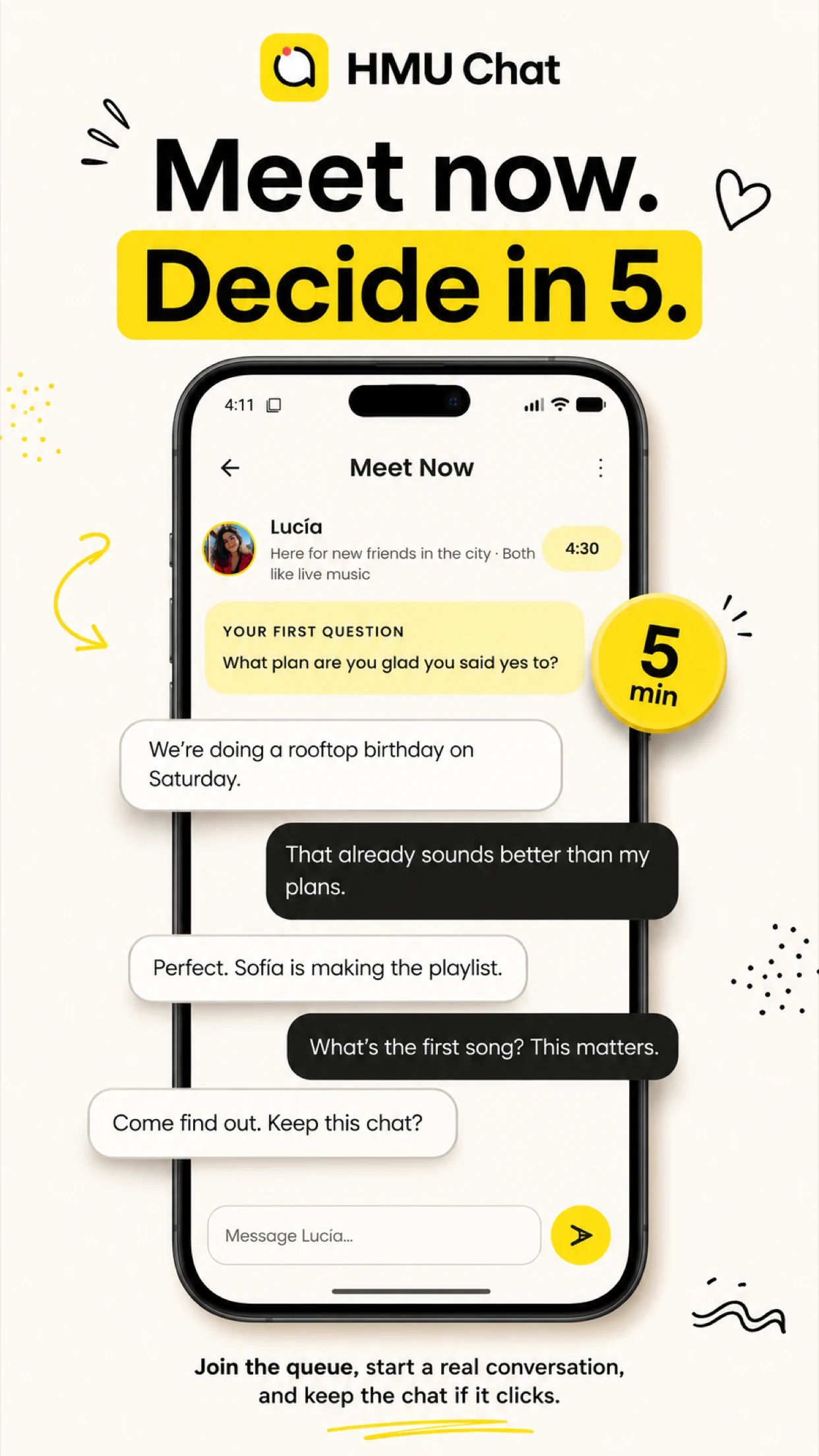
- A shared prompt, so neither person has to open with ‘hey’
- Five minutes is long enough to tell if you click and short enough to leave easily
- Your choice stays private
If you want to meet people in person, not in chat
Meetup is the strongest option for repeat, in-person contact. Joining groups and RSVPing is free, and the best groups meet weekly, which is how acquaintances become friends. Pick a small group with recent events and a clear format.
Timeleft and 222 go further and organize the outing for you. Timeleft matches four to six people for dinner, drinks, coffee, or a walk, at $19.99 a month in the US plus your own food and drinks. 222 invites vetted members to group experiences in public places and is iPhone only. Both cost money, and both depend on your city.
If you want something busier and more social
Yubo, which has been 18+ only since November 2025, mixes swiping with group livestream rooms called Lives. It suits people who enjoy a lively, on-camera space, and Yubo says people use it for dating too.
Discord servers and local Facebook groups are free and often overlooked. A city or hobby server with an active events channel can do more than any app. The trade-off is that you do all the work: finding the right server, joining in, and suggesting a meetup.
How HMU compares to BFF, honestly
HMU is better if you want a real conversation fast and hate writing openers. BFF is better if you want a friendship-only space. People come to HMU for friendship, dating, or conversation, so it pays to say what you want early in the chat.
BFF also has Groups, and HMU does not. HMU is one-to-one only, and Meet Now is for when you are free to talk right then. If you prefer replying to messages between other things, a matching app fits your day better. Both are free to use. HMU has an optional HMU Premium subscription, and BFF says all its features are free.
Get more from whichever app you switch to
Make the first invitation specific. ‘We should hang out sometime’ rarely happens. ‘There’s a quiz night at the bar on Elm on Thursday. Want to come?’ is easy to say yes or no to.
Expect to meet several people before one becomes a friend, and keep a short list of plans you would enjoy anyway, so an invitation never feels like a big ask.
Related articles
- Apps to Make Friends as an Adult: An Honest Comparison — BFF, Meetup, Timeleft, 222, Yubo, and HMU compared by how you actually meet people, what it costs, and who each one suits.
- Yubo Alternatives for Adults Who Want a Real Conversation — Yubo is now 18+, but swiping and livestreams aren’t for everyone. Here is what else adults use to meet new people, and how each one works.
- Apps Like Meetup for Making Friends — Meetup is great for weekly groups. These alternatives cover hosted dinners, friend matching, and live one-to-one chats, with costs and limits for each.