
What Meetup does well, and where it falls short
Meetup lists groups that meet in person around a shared interest. Members can join groups and RSVP to events for free. Organizers pay a subscription to run groups, some groups charge their own dues or event fees, and Meetup+ is an optional paid upgrade for members. Its biggest strength is repetition. A group that meets every week gives you the same faces again and again, and that is how adult friendships usually form.
Its weaknesses are just as clear. Group quality varies, some groups barely meet, and smaller towns have far fewer options. Large events can be hard to join alone, because people who already know each other stick together.
Hosted outings: Timeleft and 222
Timeleft asks you to take a short quiz, then matches you with four to six people for dinner, drinks, coffee, or a walk. The US subscription is $19.99 a month, prices vary by city, and you pay for your own food and drinks. 222 sends invites to group experiences in public places near you, based on your profile. Members are vetted, and you are refunded if you aren’t selected. 222 has no profiles, DMs, or swiping, and it is iPhone only. Check its current pricing and cities in the app.
Both remove the hardest part of Meetup: walking into a room where everyone already knows each other. Everyone at the table is new. The trade-off is cost, city coverage, and the fact that each group meets once. Follow up with the people you liked, or you start from zero next time.
Friend matching: BFF by Bumble
Bumble relaunched its friendship app as BFF in the US in September 2025. You match with people in your city, chat one-on-one, or join Groups, and every feature is free. It suits people who like to chat before meeting, but expect some matches to go nowhere.
Free, do-it-yourself options
Local Facebook groups, Nextdoor, and Discord servers are free and often have events that never appear on Meetup: neighborhood cleanups, game nights, run clubs. You have to search more, and you often have to suggest the meetup yourself.
Libraries, community centers, climbing gyms, and volunteer programs are offline versions of the same thing: a regular reason to be in the same room.
Live one-to-one conversation: HMU
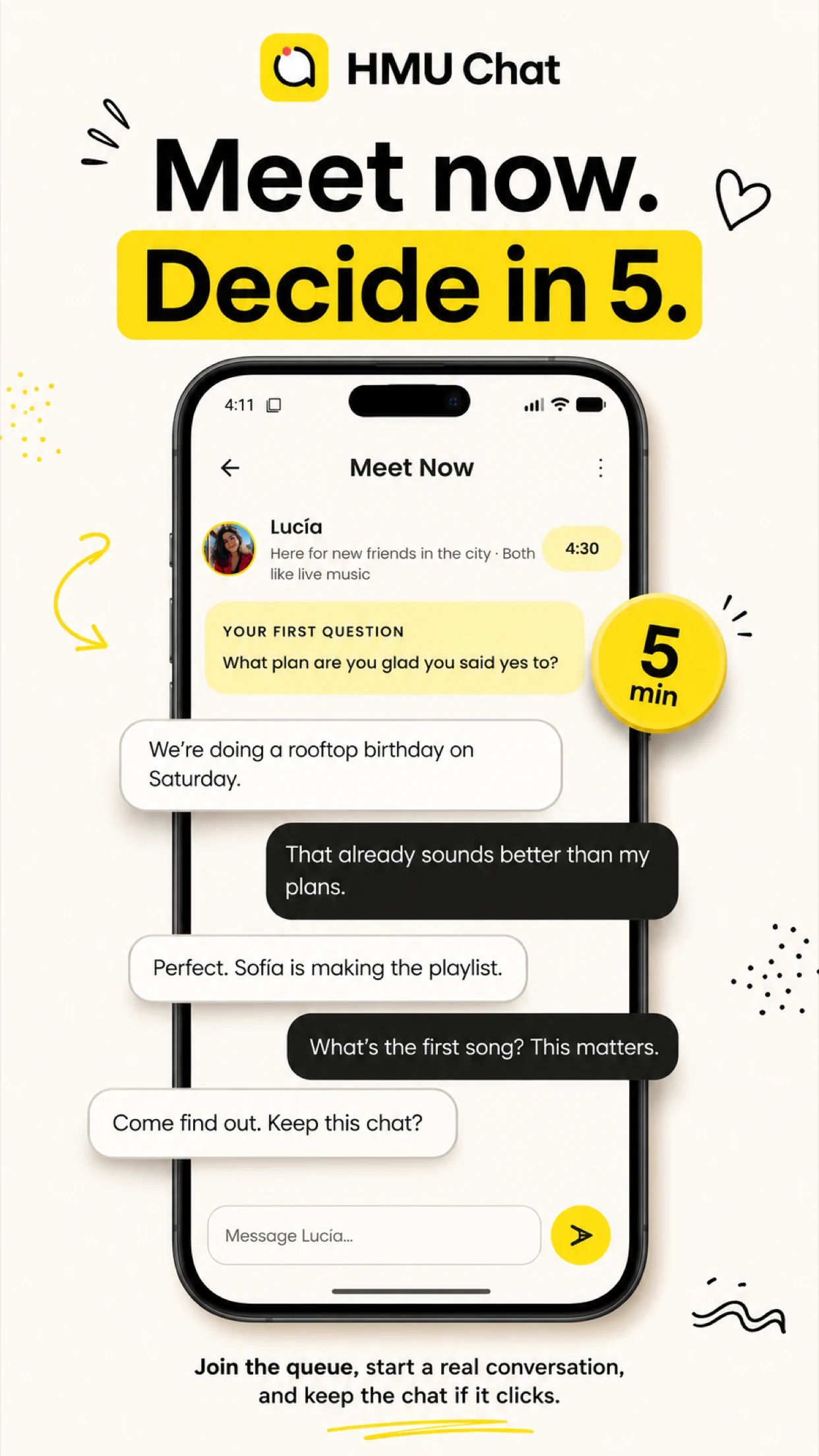
HMU is not an events app, and it doesn’t replace a weekly group. It solves a different problem: talking to someone new when you have time, without planning anything. With Meet Now, HMU finds one compatible person and gives you both the same opening prompt. You talk for five minutes. Then each of you privately chooses whether to keep talking. If you both choose Keep, the chat continues and you can make a plan.
It works well alongside Meetup. Use groups for repeat contact, and use HMU on a free evening to meet someone you might never have crossed paths with. HMU is free on iPhone and Android, for adults 18+. People use it for friendship and for dating, so say what you are looking for.
Which one to try first
If your area has an active Meetup scene, start there, pick one small group, and go three times. If Timeleft or 222 runs in your city and you have some budget, a hosted evening is the easiest way to meet several people at once. If you'd rather start with a conversation, try BFF for matching or HMU for a live chat tonight.
Related articles
- Apps to Make Friends as an Adult: An Honest Comparison — BFF, Meetup, Timeleft, 222, Yubo, and HMU compared by how you actually meet people, what it costs, and who each one suits.
- Bumble BFF Alternatives: What to Use When Matches Go Nowhere — If BFF matches keep fizzling out, these alternatives change how you meet people, from weekly groups to hosted dinners to live five-minute chats.
- Yubo Alternatives for Adults Who Want a Real Conversation — Yubo is now 18+, but swiping and livestreams aren’t for everyone. Here is what else adults use to meet new people, and how each one works.