
Short answer: you promote one
Most adults don’t find a best friend by meeting someone new who turns out to be perfect. They pick someone they already like, spend a lot more time with them, and let the conversations get more personal on purpose. The candidate is usually already in your life: a casual friend, a coworker you click with, an old friend you drifted from.
So the question isn’t really where to find a best friend. It’s who to invest in, and how.
Make a shortlist of three
Write down three people you’d enjoy seeing more. Then test each name with a few honest questions. You’re not looking for the most impressive person you know. You’re looking for someone with whom it’s easy.
- Do I leave time with them feeling better than when I arrived?
- Do they ask about my life, not just tell me about theirs?
- Have they ever suggested a plan, not just accepted one?
- Could I see them every week without it being a chore?
- Do they live, work or spend time near where I do?
Budget the hours honestly
University of Kansas researcher Jeffrey Hall estimated it takes more than 200 hours together to become close friends, after roughly 50 hours to become casual friends and 80 to 100 to become friends. Time spent hanging out and joking around counted most. Time spent working together counted less.
Two hundred hours is about four hours a week for a year. That’s why best friends so often come from settings with built-in time: roommates, teammates, a weekly game. If your shortlist person is a once-a-month dinner friend, the fix is a standing plan.
- ‘Want to make Sunday morning runs a regular thing?’
- ‘I’m doing errands Saturday. Come along and we’ll get lunch after?’
- ‘Same time next week?’
Move from plans to ordinary life
Close friends show up in the boring parts. The shift from good friend to best friend often happens when you stop only making special plans and start including each other in normal ones: a grocery run, a Tuesday dinner at home, sitting on the couch while one of you does laundry.
Low-effort time is easier to repeat, and repetition is what adds up to 200 hours.
Ask the question you’d usually skip
Time alone doesn’t make a best friend. You also have to know each other. In a series of experiments published in 2022, psychologists found that people overestimate how awkward deep conversations will be and underestimate how much the other person cares about what they share. People also felt more connected after deep conversations than shallow ones.
Go one step deeper than you normally would, and answer your own question too.
- ‘What’s been the hardest part of this year for you?’
- ‘What do you want the next five years to look like, honestly?’
- ‘What’s something you haven’t told many people?’
- ‘I’ve been worried about my dad lately. Can I talk it through with you?’
Be there in the bad week
The moment a friend becomes a best friend is often a hard one: a breakup, a layoff, a hospital visit. Show up when it’s inconvenient. Bring food, drive them somewhere, sit with them. Ask what would help rather than guessing.
Small check-ins count more than you think. Across 13 experiments with nearly 6,000 participants, people underestimated how much others appreciated being contacted, especially when it was unexpected. A text that says ‘Thinking about you today. How did the interview go?’ is the kind of thing best friends remember.
How to tell it’s mutual, and whether to say it
Look for signs going both ways: they start plans, they tell you things first, they remember the details of your week. If you’re always the one reaching out after a few months, adjust your effort rather than pushing harder.
You don’t have to say ‘best friend’ out loud. But it can help to tell someone what they mean to you. People generally underestimate how much others like them, a pattern researchers call the liking gap, so they may not know.
What to do about a one-sided friendship
- ‘You’re the first person I wanted to tell.’
- ‘I’m really glad we started doing these runs. You’ve become one of my closest friends.’
If nobody makes the shortlist
You’re not alone. In Pew’s 2023 survey, 8% of US adults said they had no close friends. Start one step earlier: build a few casual friendships first through something that repeats every week, then come back to the shortlist in a few months.
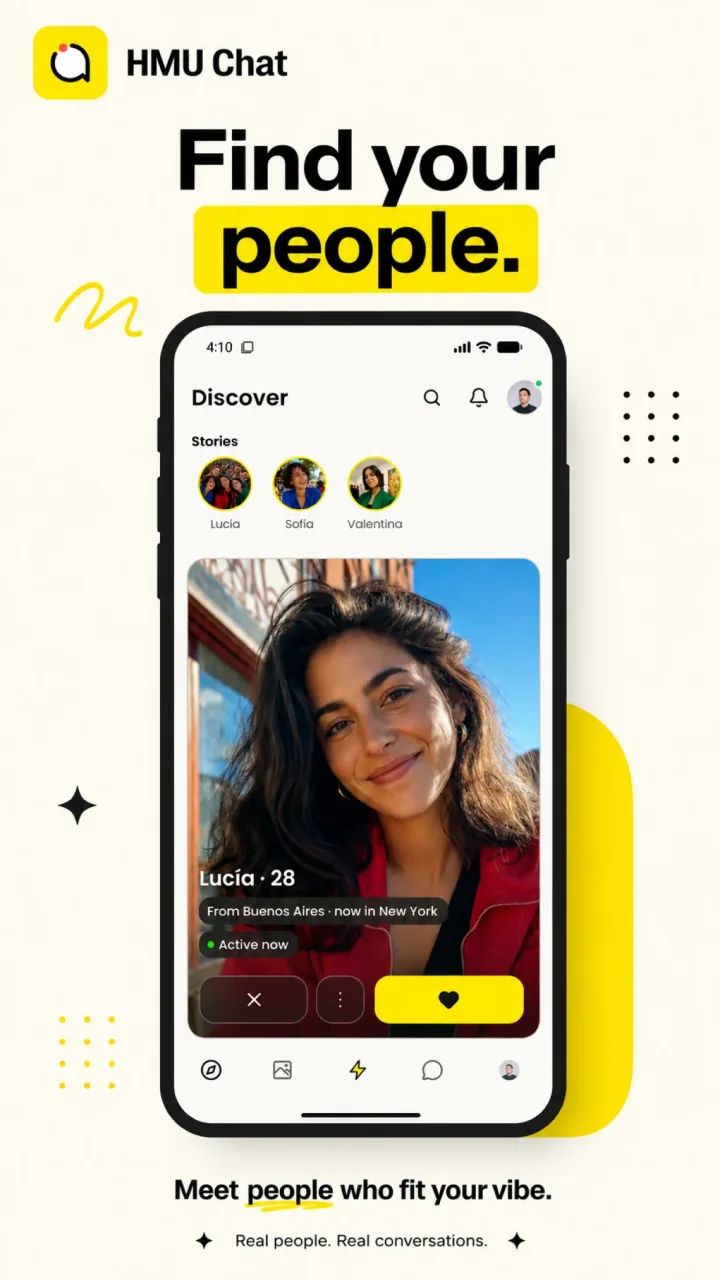
Apps can speed up the first step. HMU, with 500,000+ downloads across iPhone and Android, is a free app for adults 18 and over where every request starts with a real first message. Meet Now pairs you with one person for five minutes with the same opening prompt, and the chat continues only if you both choose Keep. A good chat is a start, not a best friend. The hours still have to happen in real life.
Related articles
- Apps to Make Friends as an Adult: An Honest Comparison — BFF, Meetup, Timeleft, 222, Yubo, and HMU compared by how you actually meet people, what it costs, and who each one suits.
- Is Meetup Worth It? An Honest Review for Making Friends — Meetup is free to download and works if you pick the right group. How to judge a group before you go, what the paid tiers cost, and when to skip it.
- Timeleft Review: Is It Worth It, and How HMU Compares — An honest Timeleft review from its own current pages: how matching works, the full cost, the no-show fee, and when HMU is the better first step.
- Apps Like 222: An Honest Review and 4 Alternatives — What the 222 app really is, from its own listing, who it suits, and four alternatives for Android users, other cities, or people who want to choose.