
The whole method in two sentences
To make small talk, comment on something you’re both experiencing, then answer every question with one extra detail the other person can grab. When they give you a detail, ask a follow-up question about it instead of moving to a new topic.
That’s it. Most small talk dies not because the topic is dull but because both people give one-word answers and then fire off unrelated questions. The rest of this guide shows how to avoid that in practice.
Why bother with small talk at all
Small talk is how you get to bigger talk, and it’s good for you on its own. In research by Gillian Sandstrom and Elizabeth Dunn, everyday interactions with acquaintances, the barista, the neighbor or the coworker from another team, were linked to people’s social and emotional well-being, not only time with close friends and family. Thirty seconds at the coffee machine counts.
Open with the shared moment
You don’t need a clever line. Comment on what’s in front of both of you, then hand it over with a question. Context beats creativity, because the other person can answer without thinking.
50 conversation starters by situation
- At work: ‘Is it just me, or is the coffee worse since they changed machines?’
- At a party: ‘How do you know [host]? I’m from the climbing gym crowd.’
- In a line: ‘Have you had the [dish] here? I can’t decide.’
- At a gym or class: ‘How long have you been coming to this one?’
Answer with a hook
Half of small talk is answering, and that’s where most people go wrong. ‘Good, you?’ closes the door. Give one specific detail, something they can ask about, comment on or relate to. You’re not oversharing. You’re giving them an easy next line.
- ‘How was your weekend?’ Flat: ‘Good.’ Hook: ‘Good. I tried to make dumplings from scratch and they fell apart, so we ate dumpling soup.’
- ‘What do you do?’ Flat: ‘I’m in marketing.’ Hook: ‘I write the emails you probably delete. Mostly for a bike company.’
- ‘Busy week?’ Flat: ‘Yeah.’ Hook: ‘Yeah, we’re moving offices, so I’ve spent three days labeling boxes.’
Follow up on one detail
When they give you a hook, take it. In studies by Karen Huang and colleagues at Harvard, people who asked more questions, especially follow-up questions, were better liked by the people they talked to. In speed-dating data, people who asked more follow-ups got more yeses for a second date. The people in the studies didn’t expect questions to make that much difference.
A follow-up shows you were listening. A new question from your mental list shows you were waiting for your turn. Use who, what or how, and react before you ask.
- They: ‘I just got back from Denver.’ You: ‘Work or fun? What did you end up doing?’
- They: ‘I’m training for a half marathon.’ You: ‘That’s a lot of miles. What got you into it?’
- They: ‘Our kitchen is being redone.’ You: ‘Oh no, how long have you been without one?’
Make it interesting, not deep
The jump from small talk to a real conversation is usually one question about opinions or plans instead of facts. ‘Where are you from?’ is a fact. ‘Would you ever move back?’ is an opinion, and opinions are where people get animated.
Swap generic questions for slightly more specific ones. ‘What are you up to this weekend?’ becomes ‘Anything you’re looking forward to this weekend?’ ‘Do you like your job?’ becomes ‘What’s the best part of your week at work?’ Save money, politics and anyone’s body for people you know well.
Small talk at work
At work, aim for short and regular rather than long. Thirty seconds before a meeting starts, two minutes while the kettle boils. Remember one detail and bring it back next time, like their kid’s game, their trip or the dumplings. That callback is what turns a coworker into someone you actually know.
Avoid complaining about other coworkers as an icebreaker. It feels like bonding in the moment, but it makes people wonder what you say about them.
- ‘How did the move go? Did the couch fit?’
- ‘You were going to try that ramen place. Verdict?’
End while it’s still good
Ending is the part people dread most, and research suggests we’re bad at it. In a study of 932 conversations by Adam Mastroianni and colleagues, conversations almost never ended when both people wanted them to, and people had little idea when their partner wanted to stop.
So don’t wait for the perfect moment, because it rarely comes. End on a high point, name a reason and refer back to something they said. That leaves a good last impression and makes the next conversation easier.
25 polite ways to end a conversation
- ‘I’m going to grab a drink, but I want to hear how the dumpling sequel goes.’
- ‘I should get back to it. Good luck with the half marathon.’
- ‘I’m going to say hi to [host]. Really nice meeting you, [name].’
Practice where the opener is handled for you
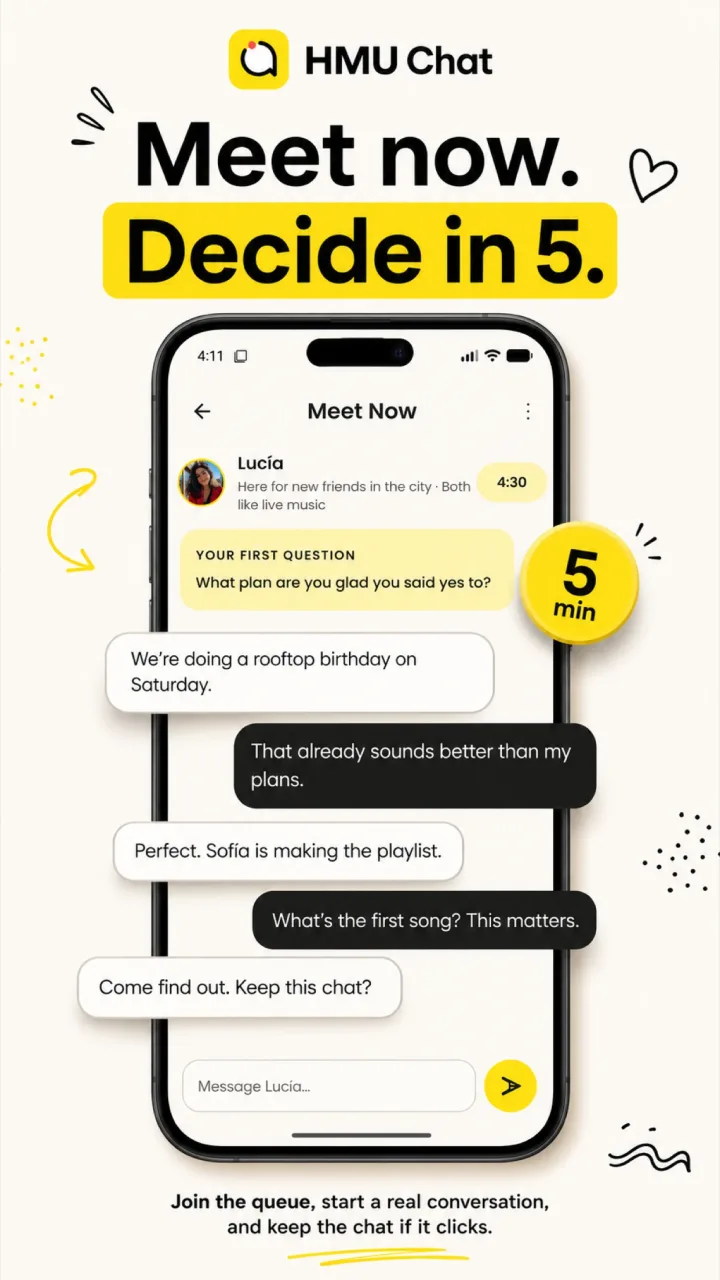
Small talk gets easier with reps, and the hardest part is the first line. HMU’s Meet Now takes that away. You’re paired with one person, you both get the same opening prompt, and you have five minutes to talk. Then each of you privately chooses Keep or Pass. It’s a low-stakes way to practice answering with a hook and following up on a detail.
Related articles
- What to Text a New Friend After Meeting Them — Copy-ready first texts for someone you just clicked with, plus when to send them, how to suggest a plan, and what to do if they don’t reply.
- Apps to Talk to Strangers (18+): Pick by How You Talk — Text, one-to-one video, or swipe-and-chat: the adult apps for talking to strangers compared on age checks, safety tools and cost, with who each one suits.
- How to Start a Conversation With a Stranger, In Person — Read the moment, open with what you both see, and know how to leave. Openers for coffee lines, gyms, dog parks and events, plus graceful exits.
- What Does HMU Mean? Meaning, Examples and Replies — HMU means “hit me up,” or contact me. What it means in texts, DMs and on dating apps, whether it’s flirty, and exactly how to reply, with examples.